Where We Are Now in 2026
Brain computer interfaces (BCIs) are no longer confined to the lab. What began as an experimental medical technology has now entered the early stages of consumer adoption, signaling a dramatic step forward in human computer interaction.
From Trials to Early Adoption
In just a few short years, BCIs have transitioned from limited clinical studies to real world use cases:
Early consumer grade devices are now available through select pilot programs and enterprise partnerships
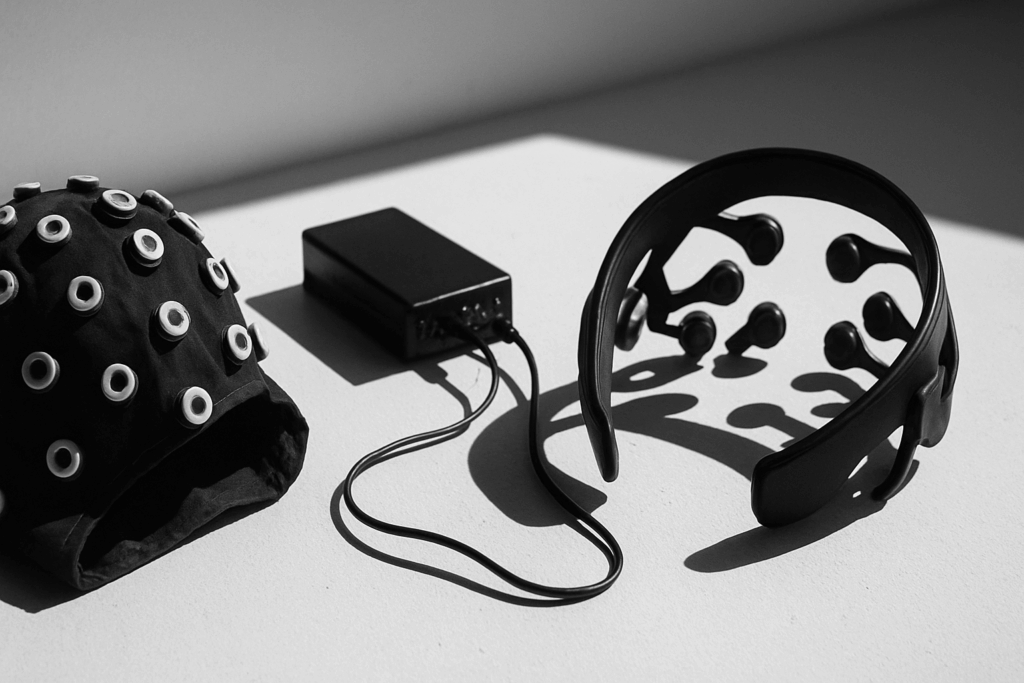
Wearable BCIs offer non invasive ways to interact with digital systems using brain signals
Developers are prioritizing usability, safety, and data security in first generation consumer products
Expanding Fields of Application
BCIs are being integrated across multiple sectors, broadening their impact far beyond healthcare:
Health: aiding in communication for patients with physical or cognitive impairment
Productivity: enabling professionals to interact with tools hands free and faster
Gaming: creating more immersive experiences by syncing neural feedback with gameplay
Accessibility: helping users with disabilities gain greater control through thought based navigation
Companies Leading the Charge
A small group of visionary companies is setting the pace for BCI innovation:
Neuralink: focusing on fully implantable devices with high data resolution
Synchron: advancing minimally invasive BCI implants through blood vessels rather than open brain surgery
Kernel: developing non invasive neural interfaces aimed at cognitive monitoring and enhancement
As of 2026, these companies are pushing the industry from potential to practical, reshaping how humans connect with technology at the most fundamental level.
Medical Breakthroughs and Neurological Freedom
Brain computer interfaces are no longer confined to labs and theoretical white papers they’re now helping people speak without moving their mouths. For patients with ALS or paralysis, BCIs are becoming viable channels for communication. By translating brain signals into text or speech in real time, these systems let users express thoughts that their bodies can’t. It’s not perfect yet, but for someone locked in silence, even a halting sentence is a breakthrough.
Beyond that, memory enhancement trials are showing signs of progress. We’re not talking Hollywood style uploads and instant recall yet but early studies suggest custom stimulation could help reinforce, stabilize, or restore certain types of memory. Right now it’s mostly happening under controlled conditions, but use cases in dementia care and cognitive rehabilitation are inching closer to real world trials.
Meanwhile, the quiet work on decoding brain signals is paying off. Non invasive systems meaning no surgery, just wearable tech are becoming faster, more accurate, and scalable. They may not yet match the signal fidelity of implanted devices, but they’re catching up fast, and they lower the bar for accessibility and adoption. For many patients, just wearing a headset to communicate or regain basic function could be nothing short of life changing.
Beyond Healthcare: Cognitive Productivity and Human AI Collaboration
The line between thought and action is getting thinner. In high pressure environments like air traffic control centers and operating rooms, BCI headsets are now being tested to enhance decision making. Early trials show promise controllers can cycle through radar readings or surgeons can scroll medical records with nothing more than a mental command. It’s not about sci fi magic; it’s about speed, focus, and minimizing manual clutter when split second choices matter.
These systems don’t work alone. They’re deeply intertwined with AI assistants trained to interpret the neural signals, crunch data, and provide recommendations in real time. A surgeon thinks “anomaly scan,” and the BCI triggers an AI routine to highlight potential issues across dozens of screening parameters. It’s fast. Sometimes, too fast for comfort.
That’s where questions start stacking up. Who owns your thoughts when an AI assistant is listening in? What happens when a brain command is misread? While the tech is powerful, it’s also invasive and the debates around mental privacy and autonomy are far from settled. What happens in your head may no longer stay there.
Gaming, Creativity, and the Edge of Experience
Virtual reality and augmented reality have long promised immersion. Now, with brain computer interfaces in the mix, they’re finally delivering it. No more hand controllers or voice commands today’s BCI enabled VR/AR systems respond to your actual thoughts. You think about turning your head or jumping, and it happens. You feel fear or curiosity, and the environment adapts in real time. It’s not just gameplay. It’s pure mental projection.
Artists and musicians are pushing this even further. Using BCI input, some are composing music or designing visual pieces straight from mental imagery. The line between imagination and digital output is blurring fast. What was once sketched, coded, or modeled can now be streamed directly from the brain. Creativity, unfiltered.
But here’s the edge: with this power comes a mess of ethical landmines. If you can stimulate or suppress emotion inside a VR space or amplify a user’s sense of awe, joy, fear where’s the line between experience and manipulation? Enhancing perception is exciting. It’s also a slippery slope. Who controls the settings? Where’s the consent line when your feelings get rewritten in real time?
As boundaries stretch and tech grows more intimate, vlogging, gaming, and creative expression are transforming. So is the need for clear ethical codes. This is no longer about pushing pixels or perfecting UX. It’s about shaping the core of perception itself.
Ties to the Digital Twin Revolution
As brain computer interfaces (BCIs) mature, they’re starting to fuel a deeper digital representation of who we are minute by minute, signal by signal. These aren’t theoretical clones or sci fi avatars. Digital twins are data driven replicas of human users, built in real time, capable of mimicking behaviors, preferences, even neural responses. And BCIs are the conduit.
By streaming brain activity directly into these digital twins, we move far beyond static profiles or health trackers. This opens new frontiers for simulation and training like pilots rehearsing in virtual environments that adapt to their cognitive load or for injury recovery, where digital twins model neural progress and optimize therapy.
In sectors like mental wellness, sports, and even work productivity, BCIs + digital twins could eventually mean preemptive feedback instead of reactive treatment. It’s precise, personal, and increasingly programmable. That means not just copying you, but iterating with you.
Related Read: The Rise of Digital Twins in Smart Manufacturing
Challenges to Widespread Adoption
Innovation tends to outpace regulation, and brain computer interfaces (BCIs) are no different. As these technologies push deeper into personal territory interpreting thoughts, emotions, and intent privacy concerns are no longer hypothetical. Mind reading, even in its early, lossy form, has sparked worldwide discussions about consent, surveillance, and the legal boundaries of cognition as data. Governments are scrambling to understand what it means when a device holds access not just to what you do, but what you think.
Then there’s the hardware. BCIs still wrestle with basic technical friction: signal noise from muscle movement, sensors that lose accuracy over time, and power hungry processing that drains batteries too fast for true mobility. Accuracy has improved, but it’s not yet frictionless. Wearing one still feels like beta testing the future, not living in it.
And for most people, the tech isn’t even on the table. At this stage, BCIs are expensive custom headsets, software integrations, and specialist support drive up the cost. We’re closer to luxury gadget than everyday tool. Until prices drop and form factors slim down, this tech stays limited to enterprise pilots, research labs, and the wealthiest early adopters.
The Decade Ahead
Brain computer interfaces are inching toward mainstream use but access remains uneven. Several initiatives are working to bring BCI tech beyond research labs and luxury markets. Think public sector grants, open source BCI platforms, and non profits aiming to get affordable, non invasive wearables into underserved communities. The goal is clear: make BCI as familiar and available as a home Wi Fi router.
Cross pollination is driving this momentum. AI and machine learning help decode brain signals faster and with more nuance. Neuroethics, once a niche corner of academia, is now in the tech development room pushing for consent standards, data transparency, and identity safeguards. As machines read more of our minds, the rules for protecting what’s left inside become non negotiable.
Looking ahead, experts argue that brain machine fluency will become a foundational skill, like typing or swiping. By the mid 2030s, interacting directly with machines via thought could be embedded into how we work, learn, and communicate. The tech is scaling fast. The big question is whether society can scale up with it.
BCIs are no longer science fiction they’re unlocking parts of the human experience we’ve never had access to before. The 2020s are proving to be the cognitive age of tech.