What XR Really Means in 2026
XR short for Extended Reality isn’t some nebulous concept anymore. It’s an umbrella for three clear, distinct technologies that are now converging: Virtual Reality (VR), Augmented Reality (AR), and Mixed Reality (MR).
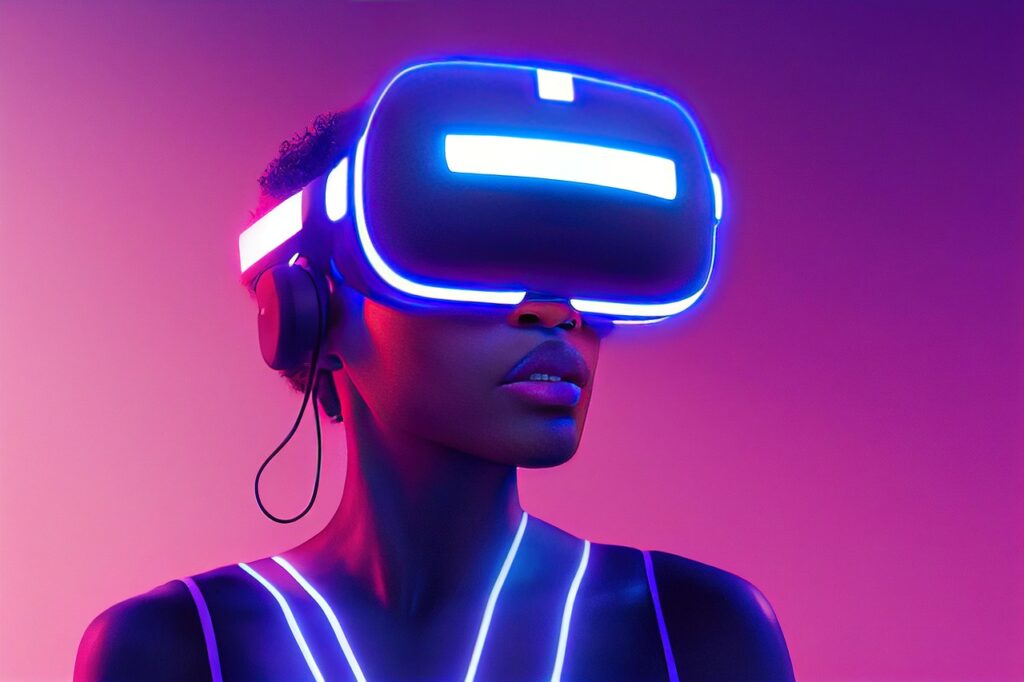
VR blocks out the physical world. You put on a headset and you’re elsewhere fully immersed in a digital space. Great for training, games, and simulations, but not ideal if you need to stay aware of your surroundings.
AR keeps your real world view but layers digital information on top of it. Think heads up displays, interactive maps, or real time translations projected into your line of sight. Your world stays visible just smarter.
MR marries the two. It anchors digital objects into physical space in real time, letting you interact with both seamlessly. You might be handing off a 3D prototype to a colleague halfway across the globe or getting instructions superimposed on real machinery.
The boundaries that used to separate these modes are eroding fast. The hardware, software, and user experiences are blending into a continuum, not a choice between one or the other. This isn’t about tech novelty anymore. In 2026, XR is becoming an infrastructure layer a platform for work, learning, shopping, communication, and play.
If the internet was the highway, XR is starting to look like the city it’s built around.
Where We’re Seeing XR Right Now
XR isn’t waiting on the sidelines anymore real industries are putting it to work. In workspaces, remote collaboration has gone far beyond basic video calls. Teams are meeting in shared virtual rooms where you can walk around, whiteboard ideas in 3D, even review a prototype like you’re physically in the same place. For global companies, immersive meetings are replacing business travel. It’s cheaper, faster, and weirdly more human.
Healthcare is leveling up too. Surgeons are now training on virtual replicas of real procedures, while XR rehab programs turn recovery into a kind of game which gets patients moving quicker. There’s also new support for cognitive therapy sessions, where patients explore controlled environments built to help with anxiety, PTSD, or focus disorders, all without ever leaving home.
In education, simulations are no longer bonus content they’re the curriculum. From high school biology to university level architecture, students interact with VR ecosystems to learn by doing, not just reading. XR helps bridge the engagement gap and brings concepts to life that textbooks couldn’t touch.
And retail? The try before you buy revolution isn’t coming it’s here. Shoppers can see how a couch fits in their living room or test how makeup looks on their face with a flick of their phone or headset. It’s the kind of experiential touch that boosts confidence and cuts returns. Brands not adapting risk being left behind.
XR has officially left the novelty phase. It’s utility now. Whether you’re buying, healing, learning, or working someone’s probably building an XR layer into it.
Tech Advances Driving XR’s Momentum
In 2026, the momentum behind Extended Reality (XR) isn’t just hype it’s powered by an ecosystem of breakthrough technologies that are finally mature enough to deliver truly immersive, practical experiences. Here’s what’s making that possible:
Next Gen Headsets: Smaller, Sharper, Smarter
Today’s XR headsets are a far cry from their bulky predecessors. The latest generation is:
Wireless and lightweight, optimized for comfort during long sessions
Equipped with 8K resolution for ultra crisp visuals, minimizing pixelation and visual fatigue
Designed with better ergonomics, making all day use more feasible in professional and educational settings
Total Sensory Immersion: Audio + Touch Get an Upgrade
Seeing is only half the story. In 2026, the XR experience is truly multi sensory:
Spatial audio now delivers highly directional, responsive sound that mimics real world acoustics
Advanced haptics let users feel texture, resistance, and motion, dramatically increasing the realism of interactions
These upgrades are making virtual training, remote maintenance, and interactive storytelling more immersive than ever
Powering the Experience: GPUs and Streaming
The tech under the hood is just as critical:
Fifth generation GPUs are supercharging real time rendering, enabling richer environments with less lag
Low latency cloud streaming is offloading compute to the edge, reducing the hardware burden on devices and improving accessibility
Playing Nice: Improved Interoperability
For XR to scale, it has to integrate with the broader tech ecosystem. In 2026:
Interoperability standards are helping different XR platforms and tools work together
This is enabling cross platform development and smoother user experiences across enterprise, health, gaming, and education
Direct Interfaces: The Human Tech Link Evolves
Perhaps the most transformative shift is the onset of new forms of interaction:
XR devices can now interface with emerging technologies like brain computer interfaces (BCIs), reshaping input methods entirely
These integrations promise to make XR more intuitive, responding to thought, emotion, and neural intent
Learn more: How Brain Computer Interfaces Are Redefining Human Potential
The scaling of XR isn’t happening in a vacuum it’s the result of software, hardware, and human centered design converging to create experiences that feel not just digital, but real.
Challenges on the Road Ahead
For all its promise, XR isn’t frictionless yet.
Long sessions in virtual environments still come with a cost eye strain, motion sensitivity, and sheer mental fatigue. Immersion has its limits, especially when the human brain is trying to parse a high res digital world wrapped around a physical one. Until headsets account for user comfort the same way they do resolution, XR won’t dominate the all day workflow or leisure time.
Privacy is the next obstacle. XR hardware collects data beyond clicks and scrolls. It tracks how users move, look, and react spatial data, gesture patterns, even micro expressions. All that biometric feedback needs storage, processing, and (most critically) protection. Right now, the guardrails are murky, and most users don’t really know what’s being captured or how much of it leaves the device.
Then there’s the cost. Entry level devices deliver only slices of the XR pie. Premium rigs with full immersion features 8K visuals, advanced haptics, low lag streaming still come with a hefty price tag. That limits wide adoption, especially outside enterprise environments.
Finally, XR is facing a fragmentation problem. Content is scattered, platforms are siloed, and there’s no single, unified framework for discovering or navigating XR experiences. Think of it as the web before search engines alive but confusing. Until a more cohesive ecosystem forms, mainstream users won’t know where to start.
These challenges aren’t deal breakers. But for XR to grow from exciting tech to everyday standard, they can’t be ignored.
What’s Coming Next
The clunky headsets of yesterday are giving way to lightweight, glasses style wearables that actually look like something you’d wear in public. By 2026, these are no longer the exception they’re the norm. Think less sci fi prop, more stylish accessory. The shift in form factor is removing one of XR’s biggest barriers: wearability. With smart glasses sliding into mainstream fashion and price points starting to dip below four figures, adoption is scaling fast.
Meanwhile, XR native social platforms are coming in hot. Instead of swiping on a screen, people are interacting in virtual hangouts that feel more like physical presence than pixelated animated avatars. These platforms aren’t just clones of existing apps they’re being rebuilt from the ground up for immersive contexts, and they’re pulling in Gen Z and Gen Alpha by the millions.
On the industry side, the momentum isn’t any slower. Architects are using XR to design and walk through buildings before brick one is laid. In logistics, XR is streamlining warehousing and training fleets of workers faster than traditional methods ever could. Mental health professionals are tapping into immersive environments for exposure therapy, mindfulness, and emotional regulation.
The bottom line: XR is no longer niche. It’s the operating system of a new digital generation fluid, always on, and deeply embedded in daily life. The future interface isn’t a screen. It’s space itself.