
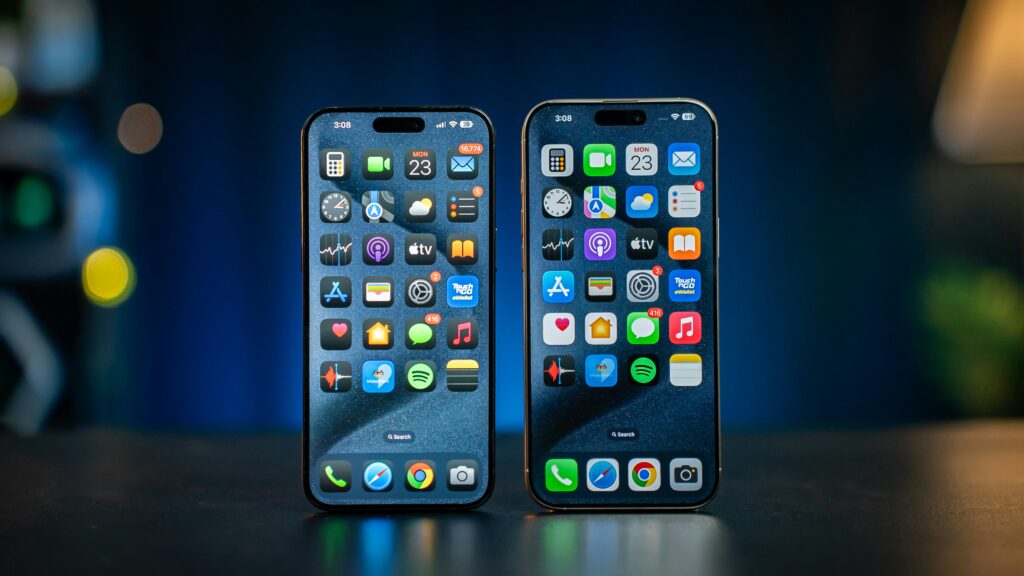
Design and Build: Premium vs. Personal
Apple keeps doing Apple. The iPhone 18 Pro is a solid slab of minimalism clean lines, smooth edges, no nonsense. It’s the kind of design that doesn’t shout, but always feels expensive. The Ceramic Shield glass is no gimmick either. It holds up surprisingly well to drops and scratches, which matters when your phone doubles as your camera rig and daily navigator.
Samsung, on the other hand, leans into style and options. If you want a phone that feels a bit more personal colors, materials, subtle curves the latest Galaxy lineup gives you choices. And if you’re tired of flat rectangles, the Galaxy Z Fold6 and Flip6 are pushing form forward. Foldable screens aren’t just eye catching anymore they’re sturdy, useful, and finally smooth where they need to be.
What feels better to hold? That’s entirely subjective. The iPhone brings weight and polish. The Galaxy offers flexibility literally and figuratively. Pick based on your grip and how much you care about standing out at the coffee shop. Either way, you’re not losing.
Display Showdown
When it comes to screens, both the iPhone and Galaxy deliver top tier visuals but not in exactly the same way. The Galaxy’s QHD+ Dynamic AMOLED display edges ahead in resolution and contrast. Blacks are truly black, colors are vivid without oversaturating, and details stay crisp even under fast motion. Apple’s Super Retina XDR, while slightly lower in resolution, still impresses with color accuracy and a more true to life tone that appeals to editors and purists.
Both phones hit 120Hz refresh rates, but Galaxy pulls ahead with smoother adaptive tuning. Samsung tailors refresh rate based on what’s happening on screen, preserving battery life without sacrificing flow. Scrolling, swiping, gaming it all feels fluid, without the overkill when you’re just reading text.
Then there’s brightness. The Galaxy punches higher in peak nits, which makes a big difference outdoors. Whether you’re vlogging under harsh sunlight or just using GPS on a hike, Samsung’s screen usually stays more readable. Apple’s panel holds its own, especially with HDR content, but it doesn’t quite cut through glare like the Galaxy does.
In short: both are stunning. But for creators who film, edit, or watch their work outside or on the move, the Galaxy’s display tech offers a slight but noticeable edge.
Power and Performance in 2026
A18 Pro: Apple’s Efficiency Powerhouse
Apple continues its legacy of chip dominance with the A18 Pro. Designed specifically for iOS 20, this chip prioritizes efficiency and consistency, offering smooth performance across everyday tasks and demanding workflows alike.
Delivers high single core speeds for real time responsiveness
Battery friendly architecture for sustained performance
Built in neural cores enhance on device AI tasks like voice processing and photography
Samsung’s Split Personality: Exynos vs. Snapdragon
Samsung still divides its flagship performance between regions, with the Exynos 2600 in some markets and the Snapdragon 8 Gen 3 in others. The difference is noticeable and for power users, potentially deal breaking.
Snapdragon 8 Gen 3: Exceptional GPU performance and thermal efficiency
Exynos 2600: Improved from previous versions but still behind in graphics intensive tasks
Where you buy the phone greatly shapes your processing power
RAM and Real World Multitasking
When it comes to background processes, split screen apps, and large file handling, Galaxy has the edge on paper and often in practice.
Galaxy S26 Ultra comes with up to 16GB of RAM
iPhone 18 Pro Max tops out at 8GB, but iOS optimization closes the gap for most tasks
Professionals and creatives may notice Galaxy’s advantage in heavy duty use cases
Heat Management and Performance Under Pressure
Performance doesn’t matter if your phone can’t stay cool under strain. Both Apple and Samsung have upgraded their thermal systems, but subtle differences can decide the winner in high stress scenarios like mobile gaming or 4K video rendering.
The A18 Pro maintains lots of peak performance through passive efficiency
Snapdragon toting Galaxy devices utilize vapor chamber cooling for sustained gaming sessions
Galaxy stays cooler longer but iPhone stays solid without throttling, even when warming up
Bottom Line:
If you’re after raw power and multitasking flexibility, Galaxy takes a slight lead especially when paired with Snapdragon. But for reliable, day to day premium performance, Apple’s A18 Pro remains unmatched in consistency.
Camera Capabilities That Actually Matter

In 2026, both Apple and Samsung have taken mobile photography to places that once needed pro level gear. The iPhone continues to lead when it comes to realism and warmth. Its computational photography system makes human subjects look natural without crossing into plastic airbrushing territory. Colors stay true, skin tones are handled with care, and dynamic range rarely misses the mark. It quietly does the work so storytellers can focus on the moment.
Meanwhile, Galaxy isn’t playing catch up it’s rewriting the playbook. A massive 200MP sensor gives power users room to crop, zoom, and reframe without sacrificing too much detail. Add in variable zoom and dedicated modes for astrophotography, and you’re looking at a creator’s utility knife. It’s technical, but that’s the point. Galaxy’s imaging toolkit is made for those who like control.
When it comes to night and motion photography, both phones hold their ground just in different ways. The iPhone stabilizes handheld low light video with finesse and minimal noise. Galaxy lets you stretch exposure and lock in focus in tricky conditions. One makes it easy, the other makes it powerful.
So who wins? That depends. If you’re all about capturing candid moments with emotional depth, iPhone’s realism wins you over. If you want the freedom to experiment and push hardware to its limits, Galaxy might be your new best friend.
Battery Life + Charging Speed
Apple keeps finding a way to squeeze more hours out of less. With iOS 20, the iPhone leans hard into smart power distribution, adjusting performance in real time based on usage patterns. You won’t see the biggest battery on paper, but thanks to that tight software hardware integration, the experience often feels smoother and lasts longer than specs suggest.
Samsung goes the other direction. The latest Galaxy flagship throws down with a bigger battery and faster charging 45W wired and 25W wireless. That’s quick enough to get back to 50% in around 20 minutes. If you’re the type to forget to plug in until morning coffee, Galaxy’s speed is a clear win.
In the real world, both phones can make it from dawn to midnight. Casual use? Toss up. But if you’re filming, editing, and uploading 4K all day, Galaxy holds up better under heavy workflows. The raw power pays off when efficiency alone isn’t enough.
Ecosystem Wars: iOS vs. Android in 2026
The divide is more defined than ever, and loyalty runs deep. Apple’s ecosystem remains the benchmark for cohesion. Handoff between iPhone, Mac, and iPad is nearly seamless. You can copy text on your iPhone and paste it on your Mac, answer calls from your laptop, or start a vlog edit on one device and finish it on another without missing a beat. The Apple Watch stays tightly coupled too fitness tracking, media control, and even camera triggering happen in sync, without fuss.
Samsung, meanwhile, has tightened its own ecosystem game. Galaxy phones now speak fluently with Galaxy Book laptops and Tab Ultra tablets. Samsung DeX has become smoother and more practical, and Quick Share rivals Apple’s AirDrop in speed and reliability. The workflow across devices finally feels less like patchwork and more like an intentional system.
Voice control? Siri is stable and predictable, though still a step behind in proactive smarts, while Bixby is more open but underused. When it comes to smart homes and connected wearables, both platforms handle the basics. iOS edges out in pure polish, while Galaxy offers more knobs to turn if you like fine tuning.
Bottom line: the Apple ecosystem feels like a walled garden with curated beauty. Samsung’s feels more like a versatile toolkit. Pick your poison or your playground.
(Related: Top 5 Smartwatches Reviewed: Features, Battery & Performance)
At the End of the Day
When all the specs, features, and comparisons are laid out, the decision between iPhone and Galaxy in 2026 comes down to a fundamental question: what kind of experience do you want from your phone?
Why People Choose iPhone
If your priorities center around consistency, security, and a beautifully unified experience across devices, the iPhone continues to deliver:
Polished ecosystem: Seamless integration with macOS, iPadOS, Apple Watch, and other Apple services
Best in class privacy: Proactive security practices and on device processing for many AI features
User experience: iOS 20 emphasizes fluidity, fewer bugs, and intuitive navigation
The iPhone remains the go to for users who prefer stability over surplus features.
Why Galaxy Has the Edge for Some
For those who want flexibility, customization, and bleeding edge hardware, Galaxy remains a strong contender:
Innovation leadership: Foldables, S Pen compatibility, and customizable UI options
Performance power: More RAM, faster wired/wireless charging, larger sensor cameras
Open ecosystem perks: Strong integration with Windows devices, and greater app/control freedom
Samsung caters to users who want to tailor their experience down to the smallest detail.
Bottom Line: Choose Based on What Matters to You
Prefer control and feature flexibility? Galaxy might be your perfect fit.
Want a consistent, refined, and secure experience? iPhone is still tough to beat.
In 2026, both phones are excellent they just serve different user mindsets.